


2023 Volume 6 Issue 6 (Published 31 August 2024)
|
|
INEOS OPEN, 2023, 6 (6), 167–171 Journal of Nesmeyanov Institute of Organoelement Compounds Download PDF |
|


Features of the Heterofunctional Polycondensation of Phenyldialkoxysilanes
by the Pierce–Rubinstein Reaction
a Nesmeyanov Institute of Organolement Compounds, Russian Academy of Sciences, ul. Vavilova 28, str. 1, Moscow, 119334 Russia
b Tula State Lev Tolstoy Pedagogical University, pr. Lenina 125, korp. 4, Tula, Tula Oblast, 300026 Russia
c Moscow Institute of Physics and Technology (National Research University), Institutskiy per. 9, Dolgoprudny, Moscow Oblast, 141700 Russia
Corresponding author: M. N. Temnikov, e-mail: temnikov88@gmail.com
Received 11 April 2024; accepted 13 June 2024
Abstract
This work is devoted to the investigation of the interaction features of phenyldialkoxysilanes (methoxy, ethoxy and n-propoxy, AB2-type monomers) in the Pierce–Rubinstein reaction under different conditions. The effect of the monomer introduction rate, monomer concentration, and temperature on the structure and molecular weight characteristics of the products was evaluated. Using 1H and 29Si NMR spectroscopy as well as MALDI-TOF mass spectrometry, it was shown that an increase in the volume of the organic substituent (on passing from Me to Ph) at the silicon atom leads to the products of cyclic and linear structures.
Key words: phenylalkoxysiloxanes, phenylsilsesquioxanes, cyclosiloxanes, the Pierce–Rubinstein reaction.
Introduction
The rapid and continuous development of organosilicon chemistry promotes the creation of new approaches to the synthesis of compounds with the required physico-chemical properties. An example of such an approach is the Pierce–Rubinstein reaction (PR), which opens up new opportunities for producing polymer molecules with unique properties [1, 2].
As a rule, the synthesis of polysiloxanes based on a trifunctional monomer leads to the formation of polycyclic compounds, which are called polyorganosilsesquioxanes [3].
Polyorganosilsesquioxanes of the general formula RSiO1.5 comprise an important class of organosilicon polymers. Owing to the synergy of the properties of organic and inorganic compounds, they are widely used in different fields of industry and everyday life. Of particular importance among this class of polymers are polyphenylsilsesquioxanes (PPSQs) [4]. The phenyl substituent at the silicon atom endows these compounds with improved thermal and radiation stability [5]. In combination with excellent dielectric properties, hydrophobicity, and solubility in most organic solvents, this allows them to be widely used as protective coatings for electronic devices [6–8]. The coatings based on commercial phenylsilsesquioxane (or its copolymers with bifunctional monomers) varnishes ensure long-term operation of devices under conditions of high humidity at 250–300 °C [9]. The optical transparency and high refractive index make polyphenylsilsesquioxanes attractive objects in optics and optoelectronics. They are also used as waveguides and coatings for optical devices [10].
At the same time, the main difference between PPSQs and the products obtained by polycondensation of other trifunctional organosilanes (for example, methylsilsesquioxanes) is the possibility of synthesis of the compounds with a regular structure, along with the mixed polymers, the so-called cyclolinear polymers [11]. In other words, under certain conditions, the statistical structure can completely degenerate into a polyhedral or ladder structure [12]. The sensitivity of the PPSQ structure to the synthesis conditions implies the possibility of solving the problem of optimizing properties in the "structure–properties" coordinates.
Therefore, the investigation of the peculiarities of the PPSQ synthesis by the PR reaction seems to be highly promising, since this approach has not been previously used for this purpose. Its application can lead to the production of new unknown structural forms of PPSQs. Herein, we report the results of the investigation of the heterofunctional polycondensation of various hydride-containing phenyldialkoxysilanes under the conditions of the PR reaction.
Results and discussion
The reaction implies the heterofunctional condensation of Si–H and Si–OAlk groups in the presence of tris-(pentafluorophenylborane) (BCF) used as a catalyst. Therefore, phenyldimethoxysilane (PhDMS), phenyldiethoxysilane (PhDES), and phenyldi-n-propoxysilane (PhDPS) were used as monomers for the synthesis of PPSQs (Fig. 1).
Figure 1. Condensation of phenyldialkoxysilane I and subsequent blocking of the alkoxy groups with dimethylphenylsilane (DMPS).
The polycondensation was carried out as follows: a solution of the monomer in toluene was introduced with a syringe pump into the reactor (Fig. S1 in the Electronic supplementary information (ESI)) charged with BCF. The catalyst in use is extremely sensitive to water [13, 14]; therefore, the reaction was performed under an argon atmosphere. At a standard injection rate (1 mL/min), the synthesis was accomplished in 5 min. The reaction was accompanied by active release of a gas (the corresponding alkane), which was detected with a bubbler in the absence of an argon supply. According to the reaction stoichiometry (Fig. 1), product II must contain a significant amount of residual alkoxy groups. Therefore, using the ethoxy-substituted derivative as an example (Table 1, experiment 4), the blocking of the residual ethoxy groups with dimethylphenylsilane was carried out (Fig. 1, III). The reaction was performed as a one-pot process. After the PR reaction, Al2O3 was added to the reactor to neutralize BCF [1]. The polymers obtained were analyzed by NMR and IR spectroscopy, as well as gel permeation chromatography (GPC) and MALDI-TOF mass spectrometry.
Table 1. Dependence of the molecular weight characteristics of the resulting polymers on the reaction conditions and organic substituent in the monomer
|
Exp.
|
OR
|
υ, mL/min
|
φ, %
|
T, °C
|
Мn, kDa
|
Мw, kDa
|
PDI
|
|
1
|
OMe
|
1
|
10
|
50
|
0.71
|
1.25
|
1.76
|
|
2
|
OEt
|
0.2
|
10
|
50
|
0.55
|
0.69
|
1.25
|
|
3
|
|
0.5
|
10
|
50
|
0.56
|
0.69
|
1.24
|
|
4
|
|
1
|
10
|
50
|
0.51
|
0.61
|
1.19
|
|
5
|
|
1
|
10
|
50
|
0.51
|
0.61
|
1.19
|
|
6
|
|
1
|
20
|
50
|
0.62
|
0.78
|
1.27
|
|
7
|
|
1
|
40
|
50
|
0.71
|
0.93
|
1.32
|
|
8
|
|
1
|
10
|
30
|
0.58
|
0.73
|
1.26
|
|
9
|
|
1
|
10
|
50
|
0.51
|
0.61
|
1.19
|
|
10
|
|
1
|
10
|
80
|
0.47
|
0.56
|
1.19
|
|
11
|
OnPr
|
1
|
10
|
50
|
0.99
|
1.14
|
1.15
|
In the case of the complete conversion of Si–H groups, the ratio of the integral intensities of SiPh and SiOR protons in the 1H NMR spectra should be 1:1. In the 1H NMR spectrum, it is obvious that the ratio of the Ph and OR proton signals (Figs. S2–S19 in the ESI and Fig. 2) is almost equal to the theoretical one, but the residual Si–H groups are also detected both in the 1H NMR spectrum (5.2 ppm) and in the IR spectrum (Fig. S22 in the ESI). Nevertheless, their amount is extremely low, which indicates that the PR reaction proceeded almost completely. The 29Si NMR spectra show two groups of signals with the chemical shifts in the range from –62 to –65 ppm, which can be attributed to PhSiO0.5(OR)2 unit, and from –70 to –74 ppm, which can be attributed to PhSiO(OR) unit. Of note is the lack of PhSiO1.5 signals (at –81.20 ppm). This suggests that PhSiH(OR)2 does not form phenylsilsesquioxane units under the PR reaction conditions. This differs from the results of Rubinstein obtained during the condensation of MeSi(H)(OMe)2 under similar conditions [1], when hyperbranched methylsilsesquioxanes were obtained. Presumably, in the case of PhSi(H)(OEt)2, the sterically hindered Ph group does not allow the catalyst complex to approach the already substituted silicon atom bearing one alkoxy group.

Figure 2. 1Н and 29Si NMR spectra of PPSQ-OEt obtained in experiment 7 (Table 1).
Then we varied the conditions of the PR reaction in order to study the effect of different factors, such as temperature, the type of alkoxy group in the monomer, its introduction rate and initial concentration, on the molecular weight characteristics (MWC) and structures of the resulting polyphenylalkoxysiloxanes (Table 1).
Figure 3 shows the GPC curves of polyphenylethoxysiloxanes obtained under different conditions (experiments 2–10 in Table 1). From Fig. 3 and Table 1, it is evident that the monomer introduction rate has virtually no effect on the MWC of the resulting polyethoxysiloxanes (MM is about 0.6 kDa, PDI is 1.2).

Figure 3. GPC curves of PPSQ-OEt obtained under different conditions of the PR reaction (from left to right):
monomer addition rates, temperatures and monomer concentrations.
An increase in the monomer concentration in toluene ensures an increase in the polymer molar mass from 0.5 to 0.8 kDa (see experiments 5–7, Table 1). This technique is typical for the polycondensation processes, when the dilution of a system leads to a shift in the selectivity towards cyclization, while its concentrating—towards linear products with higher MMs.
In contrast, an increase in the temperature led to a decrease in the product MM from 0.65 to 0.50 kDa, presumably due to an increase in diffusion in the system. This makes it more likely that molecules with smaller sizes will collide with each other. In this case, the selectivity should shift towards cyclization.
When phenyldimethoxy- and di-n-propoxysilanes were used as monomers, the molar masses of the resulting polymers were somewhat higher and reached about 1.0 kDa (Table 1, experiments 1 and 11). In all cases, no phenylsilsesquioxane units were found in the structures of the products (Figs. S3, S5, S7, S9, S11, S13, S15, S17, and S19 in the ESI).
The analysis of the resulting products by MALDI-TOF mass spectrometry using dithranol + AgTFA as a matrix showed that the sample consists of a mixture of molecules of various structures starting from the e/z values of 331 (439-Ag+(108)) (Fig. 4).
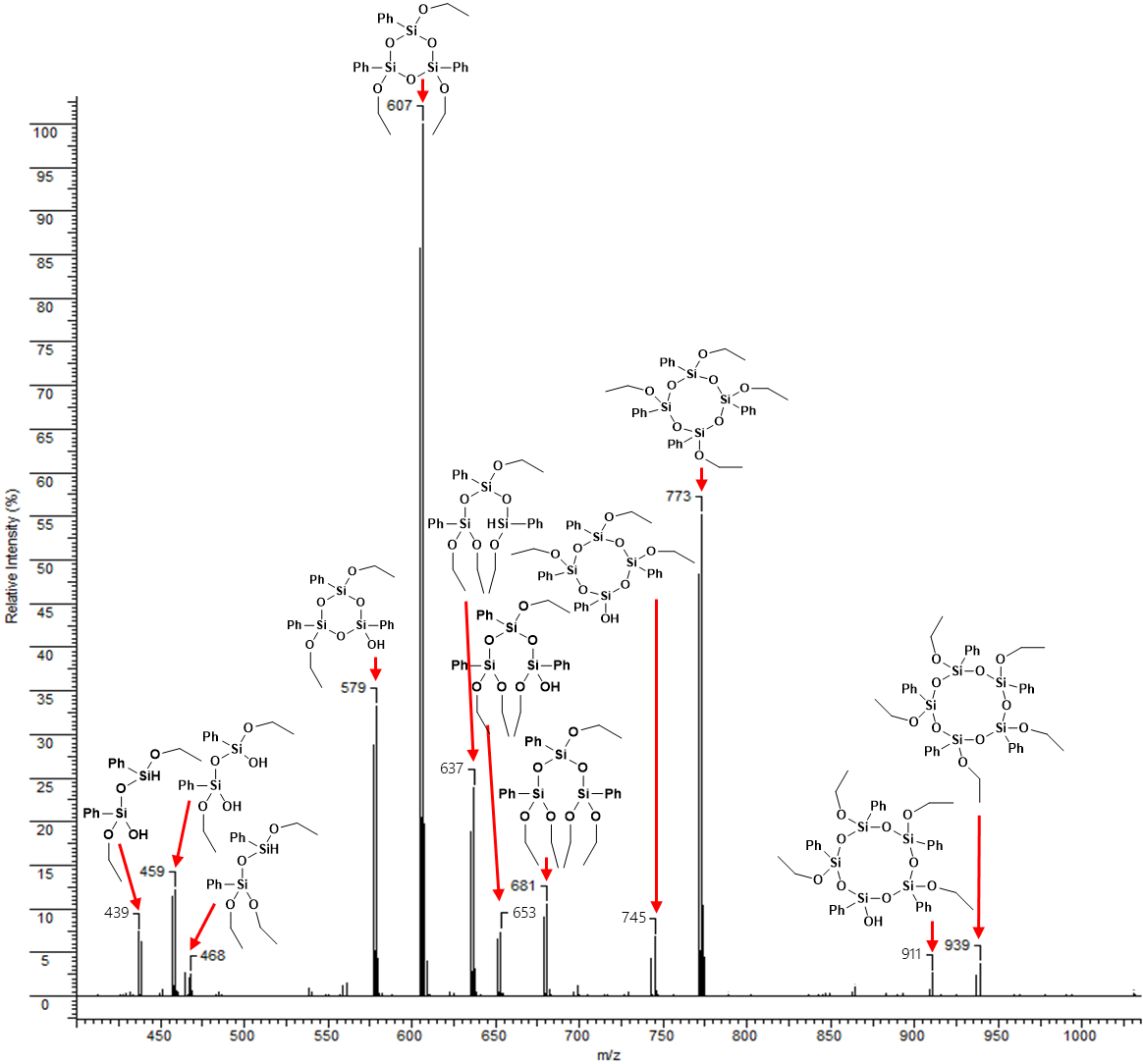
Figure 4. MALDI-TOF analysis of the structure of a polymer sample obtained in experiment 10 (Table 1).
Figure S23 in the ESI shows the proposed structures that correspond to the observed molecular masses. The analysis of probable structures revealed that the most intense peaks (579, 607, 773) can be attributed to the compounds with cyclic structures. The distance between the major peaks corresponds to the mass of an elementary unit and is equal to 166, which corresponds to PhSiO(OEt) unit and is consistent with the 1H NMR spectroscopic data. Among other peaks, of note are the peaks with m/z values of 438, 459, 468, 637, 653, and 681, which can be attributed to the compounds of linear structures.
As it was mentioned above, in the case of sample 4 (Table 1), the blocking of residual ethoxy groups was carried out. The analysis of the reaction products III by 1H NMR spectroscopy (Fig. S20 in the ESI) revealed the complete conversion of ethoxy groups. The theoretical ratio of integral intensities of the signals of SiPh and SiMe groups indicated the absence of side reactions. The 29Si NMR spectrum (Fig. S21 in the ESI) shows two groups of signals with chemical shifts ranging from –70 to – 73 ppm, which can be attributed to the units bearing PhSiH groups, and from –77 to –81 ppm, which can be attributed to the silsesquioxane units PhSiO1.5. A signal of the terminal OSiMe2Ph groups in the range from 2 to –2 ppm was also detected. Thus, the blocking reaction enabled the production of PPSQ with a complex structural composition. Based on the performed analyses, we can assume that the final product contains both cyclic and linear PPSQs.
The blocked PPSQ was investigated by TGA and DSC. The TGA studies revealed almost complete mass loss in argon (Fig. 5). Apparently, the compounds evaporated completely without decomposition. A different result was obtained in the experiment performed in air, when the mass loss was not complete. The following data were obtained: Td1% (air/Ar): 176.7/135.82 °C; mass loss onset point (air/Ar) 80.83/99.33 °C; and Tg according to the DSC analysis –66.7 °C (Fig. 6). Such a low glass transition temperature is not typical for classic PPSQs obtained by hydrolysis of trifunctional phenylsilanes (for which this value usually ranges within 120–150 °C) [15]. Hence, the resulting PPSQs feature an increased working temperature range, which allows us to consider them as the frost- and radiation-resistant oils or the components of lubricants and plasticizers.

Figure 5. TGA curve of the blocked PPSQ.

Figure 6. DSC curve of the product obtained from phenyldiethoxysilane.
Experimental section
Materials and methods
Phenylalkoxysilanes were purchased from Acros Organics. B(C6F5)3 (BCF) catalyst was purchased from TCI. Neutral Al2O3 was dried at 100 °C and 1 mbar. Toluene was distilled over calcium hydride and stored over 3Å molecular sieves.
Gel permeation chromatography (GPC) was carried out at 40 °C on a Shimadzu HPLC system (Japan) with Phenogel columns (300×7.8 mm) 103 Å, using tetrahydrofuran (THF) as an eluent and polystyrene standards.
The NMR spectra were recorded on a Varian INOVA 400 spectrometer (USA), operating at 400 MHz for 1H and 79 MHz for 29Si. The spectra were recorded in deuterated chloroform (CDCl3) and processed using the MestReNova software.
The Fourier transform infrared (FTIR) spectra of the samples were recorded on an IRTracer-100 FTIR spectrometer (Shimadzu, Japan) using the KBr pellet pressing method. The measurements were recorded in the wavenumber range of 4000–450 cm–1.
The MALDI-TOF mass spectra were recorded on an Axima Confidence time-of-flight spectrometer (Shimadzu Biotech) in the reflection high resolution mode with a nitrogen laser (λ = 337 nm). Dithranol was used as a matrix in all experiments. AgTFA was added as an electrolyte. The target was prepared as follows. The corresponding PPSQ was dissolved in THF to obtain a concentration of 10 mg/mL. Then an aliquot of the obtained solutions (20 μL) was mixed with 20 μL of a 20 mg/mL matrix solution in THF and 10 μL of a 2 mg/mL AgTFA solution in THF. The resulting mixtures were deposited on a stainless-steel target and dried in air.
The thermogravimetric analysis was performed on a DTG-60 device (Shimadzu, Japan) at a heating rate of 10 deg/min in air or an argon atmosphere (60 mL/min).
The DSC studies were performed on a DSC-3 differential scanning calorimeter (Mettler-Toledo, Switzerland) at a heating rate of 10 deg/min in an argon atmosphere (60 mL/min).
Syntheses
Phenylalkoxysiloxanes were prepared according to the published procedure [1]. The synthesis was carried out under an argon atmosphere. The corresponding monomer (1.0 g, 0.0059 mol (PhDMS), 0.0051 mol (PhDES), and 0.0045 mol (PhDРS)) was dissolved in 9.0 mL of toluene (the mass concentration in a syringe was 10% from the total volume of the solution of 10.0 mL). The resulting solution was added dropwise to BCF (50 μL, 0.0025 mmol) at 50 °C with a rate of 1 mL/min in a three-necked 50 mL flask. In 5 min, after the reaction completion, the catalyst was neutralized upon addition of 2 g of neutral Al2O3. The monomer solution was added using a syringe pump, in which the injection parameters (injection rate, syringe volume, internal diameter of the syringe) were set. In 10 min, the resulting mixture was filtered and evaporated to dryness on a rotary evaporator to give the target product. Yield: 96%.
To perform the blocking during the synthesis of phenylalkoxysiloxanes, the catalyst was not neutralized. DMPS was added dropwise into the same flask using a syringe pump at a rate of 0.5 mL/min. In 5 min, after the reaction completion, the catalyst was neutralized with aluminum oxide. The molar ratio of PhSiO(OEt) and DMPS units was 1:1. The resulting mixture was filtered and evaporated to dryness to give the target product. Yield: 99%.
Conclusions
Cycloalkoxysiloxanes with the Ph substituent at the silicon atom were synthesized. The effect of the monomer introduction rate, monomer concentration, and temperature on the structure and molecular weight characteristics of the products was evaluated, and all the compounds obtained were analyzed. It was found experimentally that the nature of the alkoxy group does not affect the MWC and structures of the resulting polymers, while an increase in the volume of the organic substituent at the silicon atom (from Me to Ph) gives rise to the products of cyclic and linear structures. The PPSQs with PhMe2Si terminal groups having a low (–66.7 °C) glass transition temperature were obtained, which makes these compounds highly promising from a practical point of view for use in various fields of science and technology.
Acknowledgements
This work was performed with financial support from the Ministry of Science and Higher Education of the Russian Federation within the Grant for the development of youth laboratories as part of the Priority 2030 program of TSPU (agreement no. 073-00033-24-01), funds under supplementary agreement no. 073-00033-24-01 of February 09, 2024 to the agreement for federal subsidy for financial support of the state assignment for the provision of public services (Creation of the chlorine-free method for the synthesis of phenylalkoxysilanes and production of modern innovative materials on their basis) no. 073-00033-24-01 of February 09, 2024 (the Ministry of Science and Higher Education of the Russian Federation).
The characterization of the compounds obtained was performed with financial support from the Ministry of Science and Higher Education of the Russian Federation (agreement no. 075-03-2023-642) using the equipment of the Center for molecular composition studies of INEOS RAS (MALDI-TOF mass spectrometry, IR and NMR spectroscopy).
Electronic supplementary information
Electronic supplementary information (ESI), available online: the PPSQ synthesis unit; the IR and NMR spectra; the proposed structures and their fragments formed during the polycondensation. For ESI, see DOI: 10.32931/io2329a.
References
- S. Rubinsztajn, J. Cella, Abstr. Pap. Am. Chem. Soc., 2004, 227, U452.
- Y. Shi, J. Cai, X. Wu, Y. Cheng, Des. Monomers Polym., 2021, 24, 285–292. DOI: 10.1080/15685551.2021.1975383
- X. F. Lei, Y. Chen, H. P. Zhang, X. J. Li, P. Yao, Q. Y. Zhang, ACS Appl. Mater. Interfaces, 2013, 5, 10207–10220. DOI: 10.1021/am402957s
- R. H. Baney, M. Itoh, A. Sakakibara, T. Suzuki, Chem. Rev., 1995, 95, 1409–1430. DOI: 10.1021/cr00037a012
- S. Pohl, O. Janka, E. Füglein, G. Kickelbick, Macromolecules, 2021, 54, 3873–3885. DOI: 10.1021/acs.macromol.1c00310
- N. A. Senatova, V. T. Nikolenkov, V. N. Spektor, R. S. Sharafiev, Dokl. Akad. Nauk, 1994, 335, 68–69.
- M. Morita, S. Imamura, A. Tanaka, T. Tamamura, J. Electrochem. Soc., 1984, 131, 2402–2406. DOI: 10.1149/1.2115266
- A. Oikawa, S.-i. Fukuyama, Y. Yoneda, H. Harada, T. Takada, J. Electrochem. Soc., 1990, 137, 3223–3229. DOI: 10.1149/1.2086191
- H. Yang, Y. Cheng, F. Xiao, Appl. Surf. Sci., 2011, 258, 1572–1580. DOI: 10.1016/j.apsusc.2011.09.137
- K.-H. Wu, K.-F. Cheng, C.-C. Yang, C.-P. Wang, C.-I Liu, Open J. Compos. Mater., 2015, 5, 49–59. DOI: 10.4236/ojcm.2015.53008
- A. A. Anisimov, Yu. N. Kononevich, P. V. Zhemchugov, S. A. Milenin, A. A. Korlyukov, U. S. Tsareva, A. S. Peregudov, P. V. Dorovatovskii, Yu. A. Molodtsova, R. U. Takazova, O. I. Shchegolikhina, A. M. Muzafarov, RSC Adv., 2016, 6, 22052–22060. DOI: 10.1039/C5RA26414F
- M. N. Temnikov, A. M. Muzafarov, RSC Adv., 2020, 10, 43129–43152. DOI: 10.1039/D0RA07854A
- T. Beringhelli, D. Maggioni, G. D'Alfonso, Organometallics, 2001, 20, 4927–4938. DOI: 10.1021/om010610n
- C. Bergquist, B. M. Bridgewater, C. J. Harlan, J. R. Norton, R. A. Friesner, G. Parkin, J. Am. Chem. Soc., 2000, 122, 10581–10590. DOI: 10.1021/ja001915g
- E. Leśniak, Z. M. Michalska, J. Chojnowski, J. Inorg. Organomet. Polym., 1998, 8, 1–21. DOI: 10.1023/A:1021617902162